New Componit

Luca Mattioli

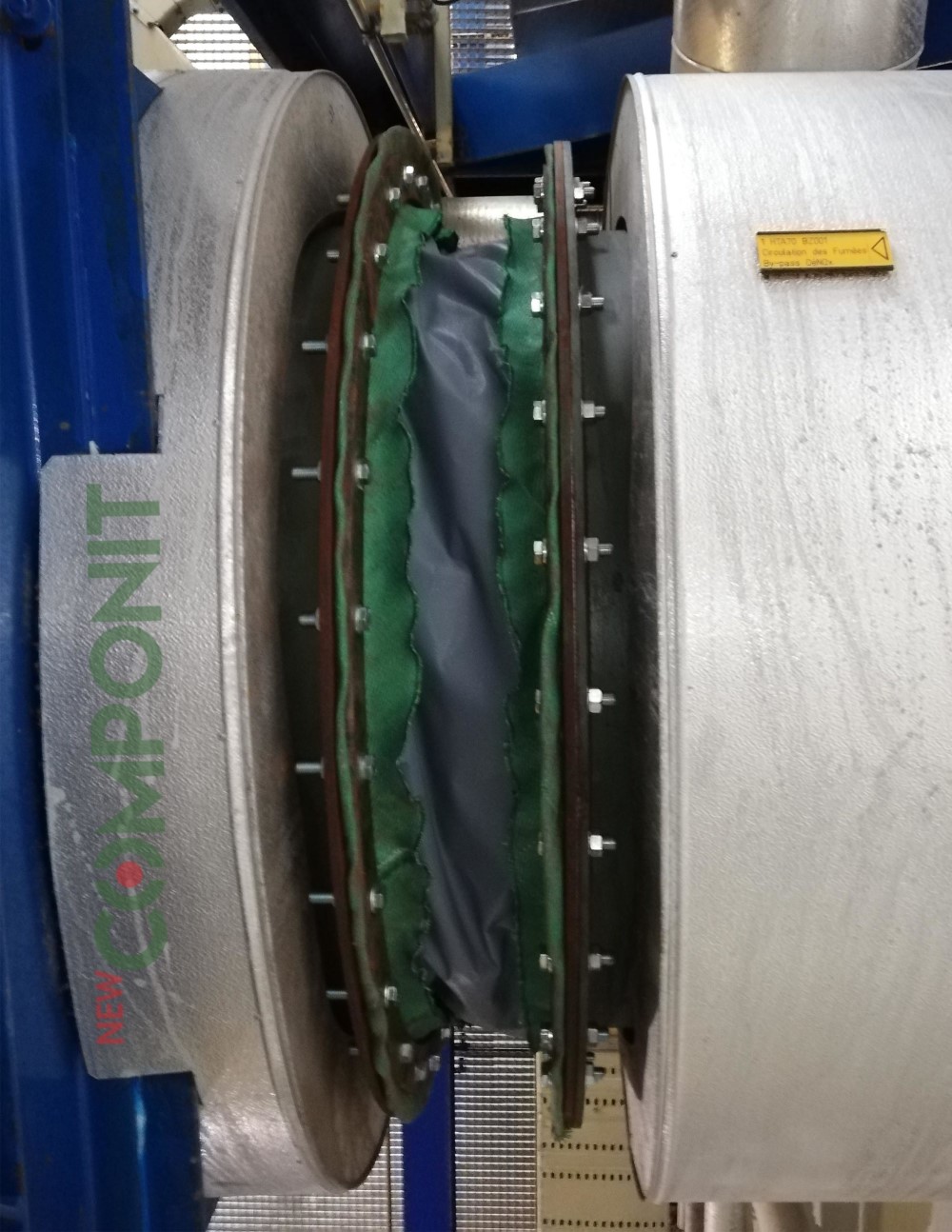
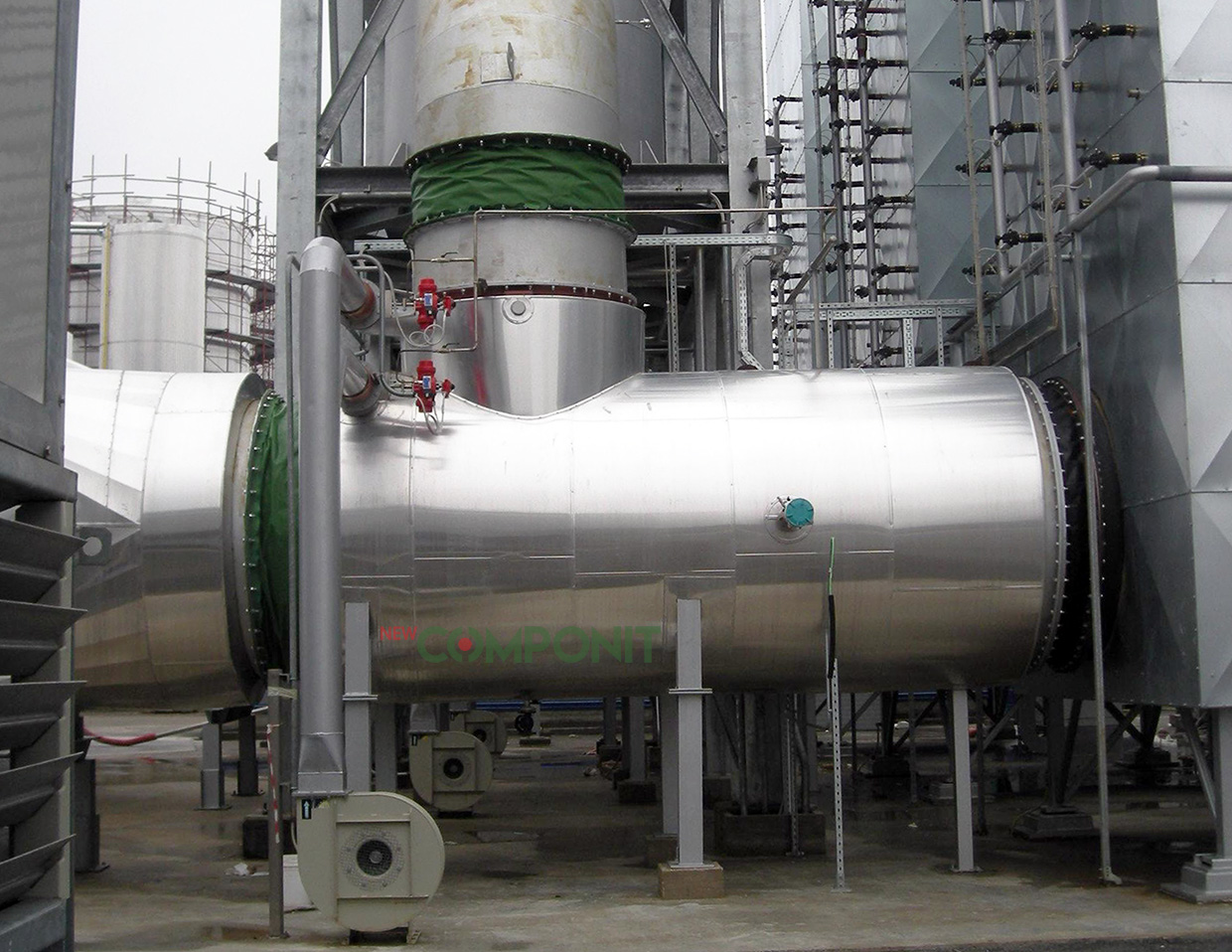
The scheduled maintenance of fabric expansion joints has to play an important role in the proper management of production.

Some companies consider the periodic maintenance as a waste of time and money, thinking that it is enough to intervene only when a problem arises.

Skipping the periodic maintenance hoping to save money can be a dangerous mistake, which could cost a sudden stop of the activity and a consequent damage to production, with all the problems that this situation would cause: delays in delivery, product batches to rebuild, equipment to rebuild, etc.

In short , scheduling a periodic maintenance is the first step not to fall into a serious loss of time and an unexpected economic waste which would be difficult to recover.

Is it convenient to plan a periodic maintenance of fabric expansion joints?

Like all other machine components, also fabric expansion joints are subjected to wear and tear, in particular in extreme working conditions.

Not all textile expansion joints are the same, so their working life cannot be predicted exactly.

However, they should not be underestimated, as they play a decisive role in the good operation of the whole system.

The failure of a fabric expansion joint can have even worse consequences than those we have seen so far.

A sudden accident not only causes damages to production, it can also cause an accident to the workers, endangering their health and causing a host of legal (as well as moral) problems for the company.

Is it really worth risking all this?

On the other hand, a regular check helps to identify all the problems – even the smallest ones – so that they can be dealt with immediately.

Fabric expansion joints have to be replaced or repaired at the first sign of wear.

This why a check-up or a thermographic analysis of expansion joints is important to see if the whole system, where they are installed, is working at the correct temperature.

By scheduling preventive maintenance and respecting the timetable, you do all the necessary to ensure the efficiency of your system and protect the environment and the safety of workers.

How to schedule maintenance of fabric expansion joints?

The preventive maintenance plan must be prepared annually by the maintenance manager in cooperation with the company that has been entrusted with the checks.

The timetable and the type of analysis to be carried out will be defined by technical experts according to the needs of the plant and the working conditions of the expansion joint.

This is why it is important to always entrust periodic inspections to skilled and experienced technicians

In any case, it is also essential to train and raise the awareness of the personnel, so that they are able to check constantly the condition of the expansion joints and request, if necessary, an extraordinary check by specialized maintenance staff.

Finally, remember to record, in a maintenance data sheet, all the maintenance activities carried out, whether ordinary or extraordinary, preventive or corrective.

The aim is to keep a record of the control interventions, so that they are always clear and well defined.

Are you looking for a company specialized in the maintenance of fabric expansion joints?

New Componit offers you a repair and maintenance service that helps you to avoid expensive stop in the production of your plant.

For 30 years we have worked in the production of fabric expansion joints, protections and custom-made products for industrial plants.

Our experienced technicians use a unique and complete analysis method: Efficiency Box® , which guarantees a detailed assessment of your plant and offers you the best custom-made solution.

New Componit also ensures:

  • Efficiency tests
  • A dedicated and skilled team
  • Assistance and periodic checks
  • Certifications and guarantees

Want to improve comfort and performance in your plant with a tailored solution?

Fabric expansion joints are very important for the right working of your plant and like all the other components, they are subjected to wear and tear and should therefore be checked periodically.

A regular monitoring is useful to understand if fabric expansion joints are without defects or if they have damages which could reduce their performance.

Talking about the performance of a fabric expansion joint is like talking about the efficiency of the entire system to which it is connected: it must be designed, manufactured and maintained to guarantee its performance over time in the mechanical resistance and the thermal reduction.

A damaged fabric expansion joint can cause important loss of load in the whole plant, it may not guarantee a proper thermal and acoustic abatement but, above all, it can be dangerous for the leakage of fluids at temperature.

It is important to notice in a short time any damage of the expansion joint, so that it is possible to try to solve the damage as soon as possible and avoid the total collapse (total and sudden rupture/tear), which could even cause the plant shut-down, with all the relevant economic and practical consequences.

How can you understand when it is time to replace a fabric expansion joint?

The first thing to do, to avoid bad surprises, is to entrust the production and installation of your expansion joints to a serious and reliable company.

With a good starting point you can be sure that the expansion joint will last longer.

However, in order to know when it’s time to replace a fabric expansion joint, you should periodically check for signs of wear, such as:

  • tears or holes;
  • portions of worn fabric;
  • colour changes;
  • exfoliation of the outer surface;
  • any leakage;
  • excessive condensation.

If the first visual inspection reveals any of these problems, then it is time to inform a maintenance engineer and take action.

Fabric expansion joints should be replaced or repaired when the first signs of wear appear.

This is very important because fabric expansion joints not only ensure the correct operation of the plant, but  they are responsible for the safety of workers, they prevent the escape of fluids during the production process and also protect the surrounding environment.

Obviously, a “do-it-yourself” visual inspection is not enough to give you a maximum guarantee of the fabric expansion joint durability.

You will need to submit your plant to an accurate and scheduled analysis at regular intervals.

If you want to have the peace of mind that you are doing your job properly, have a complete check-up carried out periodically by an experienced maintenance technician!

A thermographic analysis is important to understand whether your system is working properly.

The best would be to plan the maintenance interventions , so that damage can be prevented and you can always be sure to intervene promptly at the first signs of danger of rupture and sudden failure.

Do you want to have the security of a system always efficient?

New Componit offers a repair and maintenance service that helps you to avoid expensive block of your plant.

Rely on an experienced and qualified company: we at New Componit have been operating for 30 years in the production of fabric expansion joints, protections and custom-made items for industrial plants.

In addition, we have developed the Efficiency Box® program, which offers you a customized analysis of your plant and constant support from our highly qualified technicians:

  • efficiency test;
  • dedicated and skilled team;
  • assistance and regular checks;
  • certifications and guarantees.

Want to improve comfort and performance in your plant with a tailored solution?

In a piping system, joints and threaded fittings in flanges form, rather than sockets or expansion joints are obviously a daily occurrence.

Flanges

Within a piping system, the flange is therefore a mechanical part intended to provide a non-permanent connection between two pipes. They are points where pressure, heat, vibrations are particularly strong and above all they are structurally weak points, because they are contact points between different connections.

They are points that cannot be welded to increase their resistance, as they must allow disconnection between pipes for scheduled or accidental maintenance.

Why cover the flanges

Because they are “weak points“, in a piping system it is important to cover the flanges so that operators can work safely.

Flanged couplings crossed by chemically aggressive products or any potentially harmful product are a source of risk to the safety of personnel. In the event of failure, the liquid flowing inside can be projected from the flange coupling in a wide radius and with high kinetic energy (a phenomenon known as “Jet Fire“).

For this reason, flange couplings must be provided with adequate protection against such events.

How to cover the flanges?

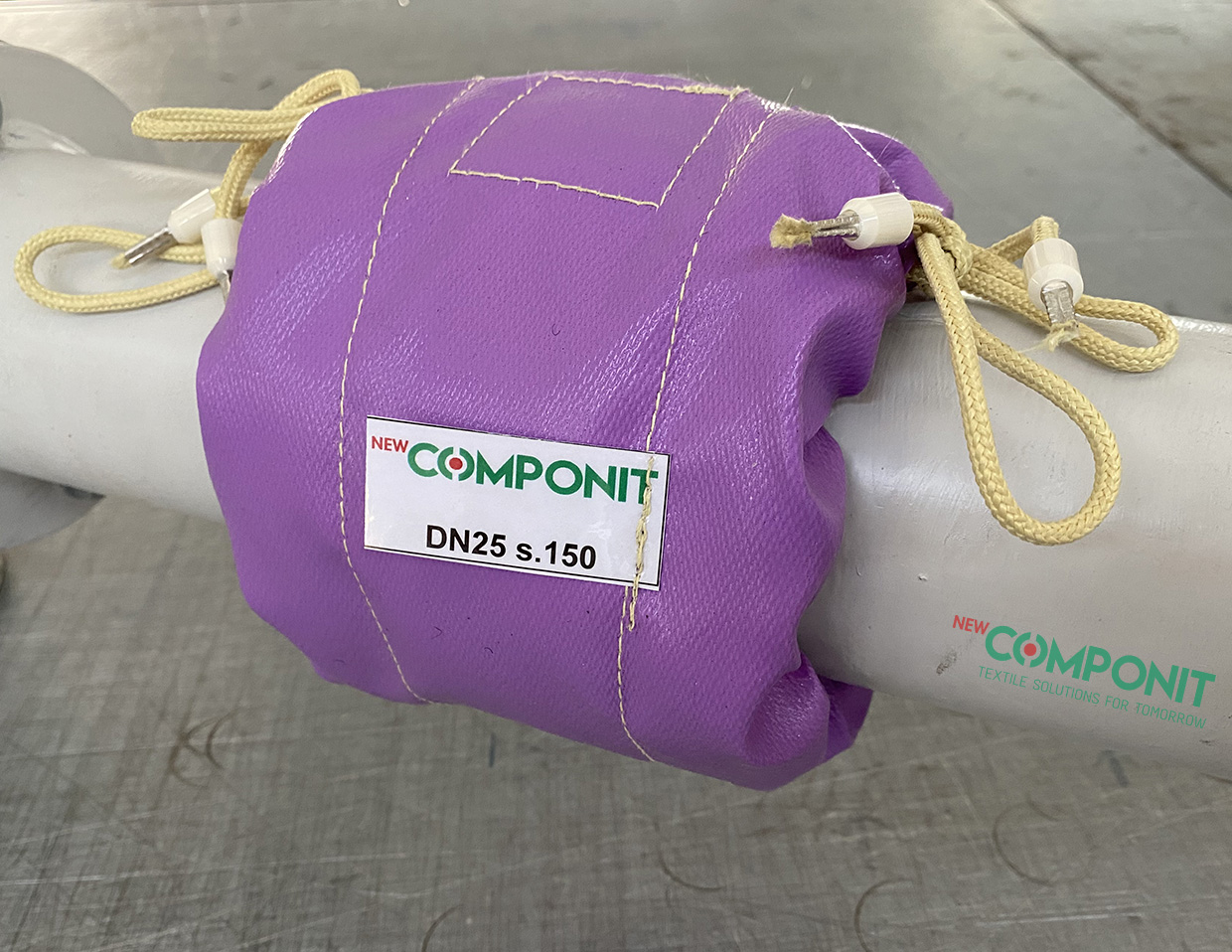
There are two ways to cover the flanges properly  by using: metal flange safety shields or fabric flange safety shields.

Metal flange safety shields  are realized with  different types of stainless steel, depending on the fluid flowing through the pipes, so that in the event of a leak the flange safety shield will tend to contain the fluid inside, letting it to drip to the ground, in this way the pressure is eliminated .

In particular, New Componit metal flange safety shields are made of Stainless Steel 304, Stainless Steel 316 L and Stainless Steel 310.

Metal flange safety shields are very strong, have a very high durability, but have the drawback that they do not contain heat.

Textile flange safety shields, on the other hand, are designed with special technical fabrics, depending on the type of fluid that is conveyed in the pipes and the temperature that can be reached. Among the materials that can be used there are fibreglass and PVC.

Compared to their metal counterparts, textile flange safety shields  have the advantage to be heat-insulating. This is important  in all situations where the fluids flowing inside the pipes are particularly hot, because it allows the operator to work without the fear to get burned.

Furthermore, since they are “custom-made“, the  textile flange safety shields can be used where traditional metal insulation cannot be, for example: because there is no space for its installation or because of the conformation of the system itself, so the flange is in a “difficult” place or has been designed in a particular way.

Are you looking for a supplier to secure your flanges?

New Componit is a company that has been working in the field of fabric joints and industrial fabric insulation since 1986. Our experience in designing custom-made solutions for all our customers can guarantee a solution to any problem about safety and heat dispersion in plants.

Want to improve comfort and performance in your plant with a tailored solution?

Before proceeding with insulation measures for industrial plants, it is a good idea to check first what the weak points of the plant are and where the thermal energy is lost, in order to plan the actions to be carried out.  For this reason it is better to carry out an energy audit.

What are an energy audit and a Tipcheck audit?

An energy audit is used to collect information about the actual energy consumption during the production process, so that the necessary actions can be taken to improve the situation.

The Tipcheck audit is a standard instrument for  thermal energy auditing , in line with EN 16247 and ISO 50002 certifications , to assess the performance of industrial insulation systems.  Actually Tipcheck means Technical Insulation Performance Check.

The Tipcheck audit is implemented by Eiif, the European Industrial Insulation Foundation, with the aim of giving the industrial sector instruments  and solutions to save energy and reduce CO2 emissions by improving their insulation systems.

How a Tipcheck energy audit works

The scope  of  Tipcheck audit is to assess the insulation systems of existing facilities, planned projects or retrofit interventions  in order to demonstrate how more efficient insulation can save energy,  money and help the environment by reducing CO2 emissions.

The Tipcheck audit consists of a standardised protocol with the scope of  producing a recommendation document based on universal insulation practices.  It has six steps:

  • Technical preparation (2 days): a meeting is held with company managers to define the aim, purpose and targets of audit;
  • Plant visit (1 -2 days): the scope of this visit is to check the points “most at risk” of heat loss, such as valves, flanges, pipes, which are not insulated, damaged or insufficiently insulated;
  • Tipcheck data collection (1-2 days): in this step there is a survey on the points identified as problematic.
  • Energy saving calculation: based on the data collected during the measurements, the current thermal energy loss of the installation can be calculated, it is also possible to calculate how much it can be reduced by applying the best insulation procedures
  • Report creation (1-4 weeks);
  • Presentation of results.

In the first 4 steps the data are collected and checked, while in the last two steps a presentation is issued.

Benefits of the Tipcheck Audit

The Tipcheck audit contributes to energy management systems such as ISO 50001 and can effectively answer how insulation can produce immediate benefits:

  • Reduction of production costs;
  • Increase of energy efficiency;
  • Reduction of CO2 emissions;
  • Improvement of process efficiency;
  • Reduction of  risks to personnel and equipment;
  • Increase of competitiveness.

The audit is only the first step

The energy audit is very important to every company, because it can reveal exactly what the weak points of a plant are and in this way plan the best way to solve them, through the use of more efficient insulation.

New Componit is certified to supply a Tipcheck energy audit and  a detailed report that shows which thermal insulation interventions can provide a real added value.

Want to improve comfort and performance in your plant with a tailored solution?


In industrial plants, noise reduction is necessary. In companies with equipment continuously in operation, the constant production of noise is almost unavoidable.

The most common sources of noise are:

  • Compressors;
  • Turbines;
  • Fans;
  • Power units;
  • Pipes;
  • Engines.

The problem is not to avoid the production of noise, which is possible, in part, through an excellent plant design, but how to reduce it as much as possible.

The health of workers passes also through a good sound absorption

A prolonged exposure to significant noise levels can cause negative health effects, such as a permanent decrease in hearing capacity; it is therefore necessary, also in accordance with the law, to reduce the exposure of workers to this source of risk.

In particular, the limit value is 87 db (A), but already from 80 db (A) the employer is forced to take actions and reduce the level of risk.

How to reduce noise in industrial plants placed in narrow or complex spaces?

The company has the duty to reduce the noise to which the worker is exposed during his work. To do this it is necessary to intervene with skilled technicians who find the frequencies to be cut down and use proper materials to “block” them.

However, in case of narrow spaces due to complicated shapes or difficult position of equipment, the traditional insulation cannot be neither placed nor removed easily.

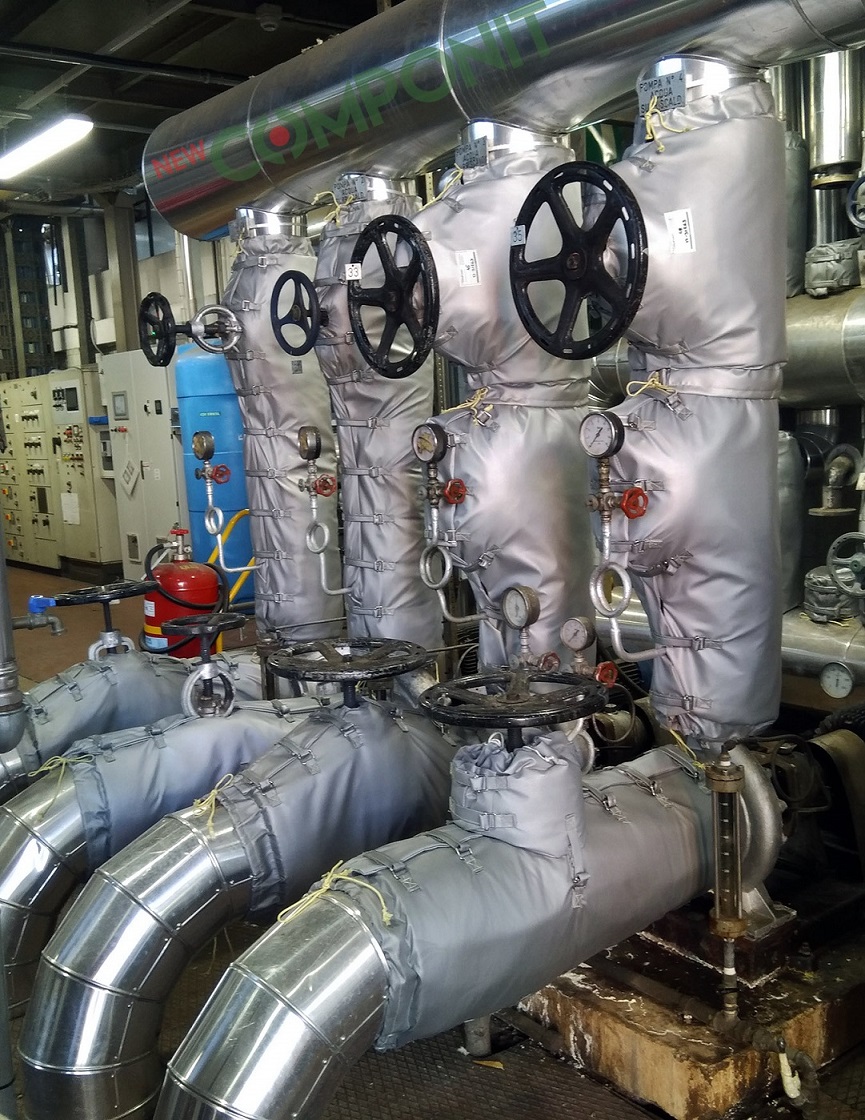
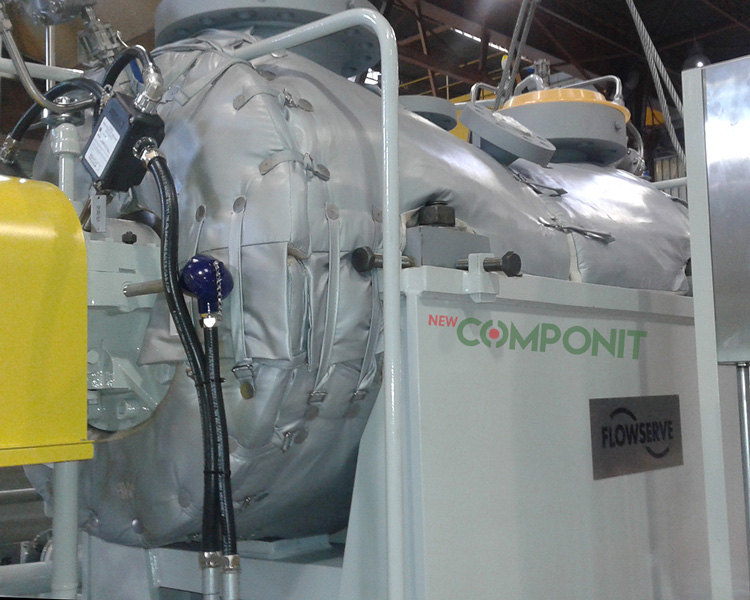
Removable acoustic (or thermo-acoustic) insulation can solve this problem in an extremely effective way. Since it is custom-made, it can be installed on every equipment and since it is easy to install and remove, it allows the worker (link) to intervene safely.

Do you need to reduce the noise of your systems and you don’t know how to do it?

New Componit has 35 years of experience in consulting and designing solutions for acoustic, thermal and thermo-acoustic control.

Our removable insulation jackets can provide for the shortcomings of traditional insulation, by giving you more flexibility and safety.

We offer customized solutions safe and certified. Thanks to our skilled technicians, you will quickly have system analysis, customized design and constant support.

Want to improve comfort and performance in your plant with a tailored solution?

In the management of an industrial plant, may arise some problems which generate inefficiencies on the whole production line.

These problems may concern heat loss, expansion of components or noise .

In order to overcome effectively these problems, companies can rely on various insulation systems that  for example allow  noise reduction and heat control.

But what are the characteristics of an effective investment?

Today we want to offer a real support to maintenance managers who are considering new insulation solutions for their plants.

Are you ready to save money thanks to  a new insulation system?

Solutions such as removable insulation allow to save a lot of money and generate much more energy and performance efficiencies.

In fact, with a quick application, you can effectively eliminate the slightest leak in your system and you can achieve higher levels of safety for your operators.

Removable insulation can be used for passive fire protection, for high heat loss or for noise reduction.

The most popular solutions are thermal and acoustic insulation jackets.

As an alternative it is also possible to use cryogenic or fireproofing devices.

What your plant really needs

The operation of an industrial plant requires precision and attention to detail.

Even the choice of an insulation system has to take into consideration every specific part of the supply.

Many companies, that choose to invest in the optimization of their industrial plant,  tend to underestimate the importance of supply guarantees.

It is not enough to consider only the quality of  materials and the level of production, it is necessary to consider the whole supply. This also includes guarantees and after-sales services, which are essential and  determine the true quality of a product.

Zero stress supply: here’s what should never be missing in your supply chain

The purchase of removable insulation systems is a smart investment, if you choose to rely on professional suppliers.

This is why New Componit, that has been operating for over 30 years in the field of heat treatment, offers its customers important guarantees along the entire supply chain:

  • Pre-sales: skilled personnel provide the customer with careful assistance and help him to identify the most appropriate solution.
  • Design and production: thanks to the most advanced technologies and the maximum preparation of its technical staff, New Componit is able to take on even the most difficult jobs and realize functional and good looking solutions.
  • After-sales: New Componit’s real strength. The customer is assured of installation and assembly, supervision and prompt intervention.

Are you looking for a partner to improve your industrial system?

New Componit offers  advanced solutions for the optimisation of industrial systems. We  designed the Efficiency Box®, a complete program that supports you in the management of your plants.

This program is designed to offer several exceptional guarantees such as:

  1. MONITORING OF THE PLANT during the operation carried out directly by our skilled team.
  2. DESIGN AND SUPPLY of the required interventions with simple and technologically advanced solutions custom-made.
  3. 3. INSTALLATION by New Componit personnel or ASSEMBLY SUPERVISION
  4. DIRECT ASSISTANCE AND IMMEDIATE RESPONSE with a dedicated toll-free number
  5. IMMEDIATE RETURN AND QUICK REPLACEMENT (in case of defects) within 7 days from delivery.
  6. ANNUAL CHECK to verify the condition of the product and its functionality.
  7. EXTENSION OF THE WARRANTY to 4 years, if the removable insulation is installed by New Componit staff.

Want to improve comfort and performance in your plant with a tailored solution?

My Agile Privacy
Privacy and Consent by My Agile Privacy

This site uses technical and profiling cookies. 

You can accept, reject, or customize the cookies by clicking the desired buttons. 

By closing this notice, you will continue without accepting.